

Blog
How is RFID used in logistics?
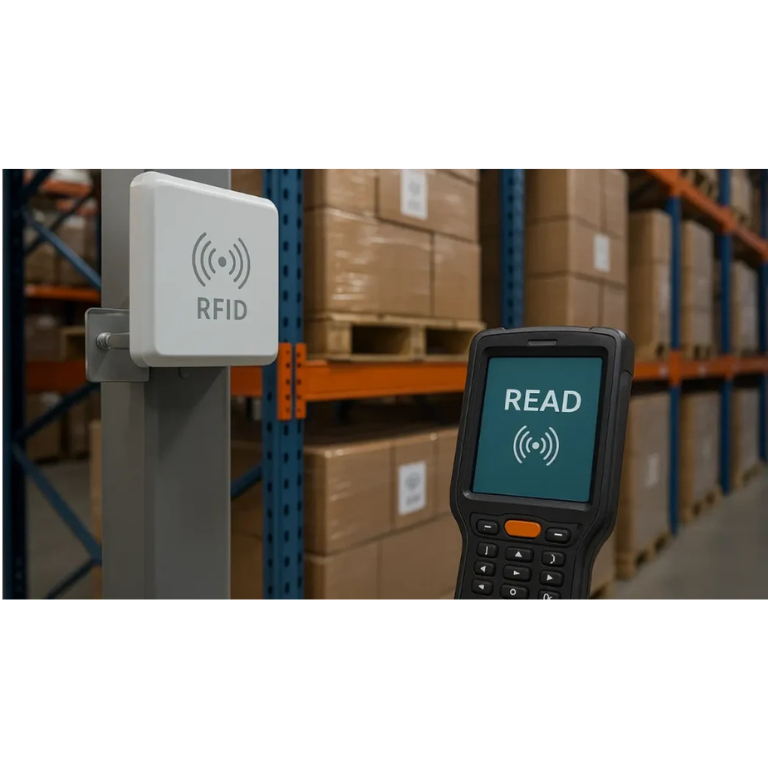
RFID uses radio waves to automatically track and identify items, pallets, and containers in real time without needing a direct line of sight.
An RFID system has three main parts:
- Tags: Small microchips with antennas attached to products or pallets that store unique identification codes.
- Readers: Devices that send out radio waves to detect the tags and read their data.
- Software: Systems that process the scanned data to update inventory records.
Key Uses in the Supply Chain
- Inbound Receiving: When a delivery truck arrives, fixed readers or RFID gates at the loading dock scan entire pallets at once. This instantly logs incoming stock without workers needing to open boxes or scan items one by one.
- Warehouse Management: Forklifts equipped with readers scan products as they move. The system uses this data to track exact storage locations, guide workers on where to put items away, and perform fast cycle counts.
- Picking and Packing: Workers use the real-time location data to find items quickly. Scanning packed orders before dispatch ensures high accuracy and prevents shipping mistakes.
- Outbound Shipping: As shipments pass through outbound doors, readers verify that the correct products are loaded onto the correct vehicle at the right time.
- Transit and Asset Tracking: Reusable containers, cages, and pallets are tracked as they move between different facilities, reducing loss and improving supply chain visibility.