

Blog
What is a biometric reader?
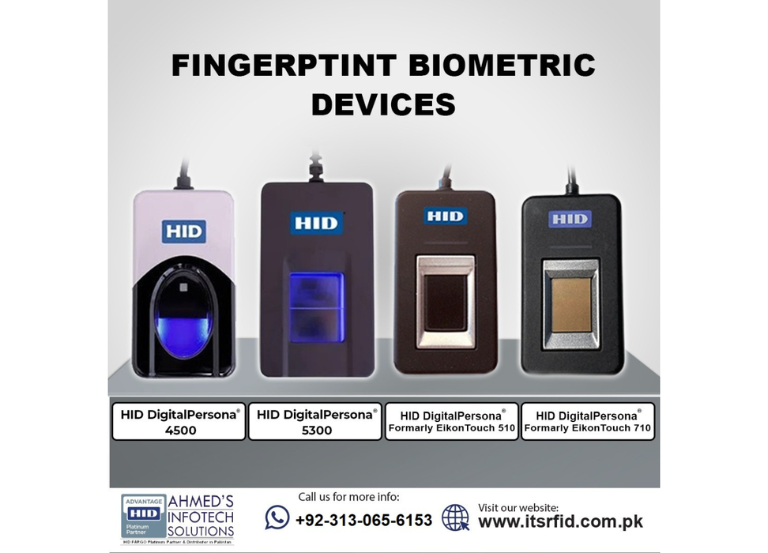
A biometric reader serves as a security and authentication tool that confirms an individual’s identity by examining and interpreting their distinct physiological or behavioral characteristics. Instead of depending on keys, cards, or passwords that can be easily misplaced or stolen, these devices utilize “who you are” to provide access.
Common Types:
- Fingerprint Scanners: Utilize optical, capacitive, or ultrasonic sensors to map the distinct ridges and valleys found on a fingertip.
- Facial Recognition: Utilize cameras to capture facial geometry, including measurements like the distance between the eyes and the shape of the nose.
- Iris/Retina Scanners: Examine the distinct ring patterns found in the colored section of the eye (iris) or the blood vessels located at the rear of the eye (retina).
- Vein Pattern Scanners: Examine the distinctive, concealed vein patterns located beneath the skin of a finger, palm, or wrist.
How They Work:
Upon initial use of a biometric reader, it records your biological characteristic and transforms the information into an encrypted mathematical template or hash. This template—rather than a genuine photograph or physical representation of your trait—is preserved in a database.
- Each time you try to authenticate, the reader performs another scan and compares the new scan with the stored template. If a match is detected, access is permitted.
Typical Applications
- Device Security: Unlocking smartphones or logging into laptops.
- Access Control: Granting entry into secure office buildings, data centers, or restricted areas.
- Time & Attendance: Monitoring employee work hours.
- Travel & Border Control: Processing passengers at airport checkpoints using passport photos and fingerprints.