

Blog
What is a fingerprint reader?
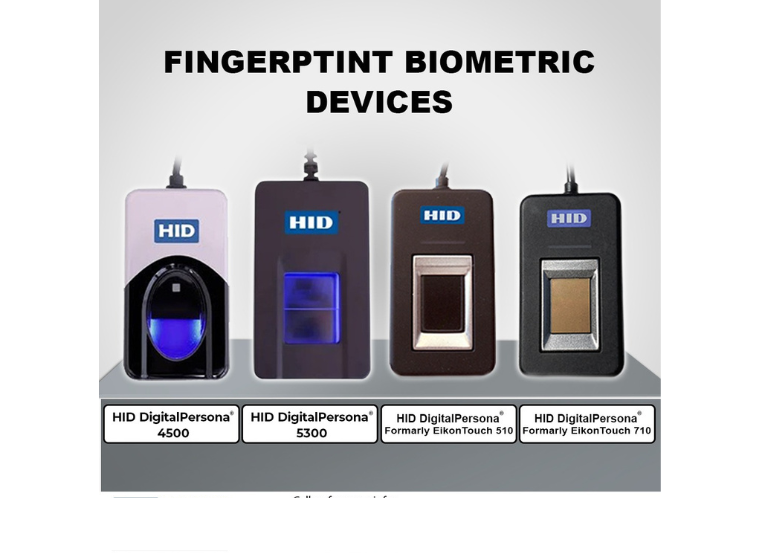
A fingerprint scanners or reader represent a category of biometric security devices that recognize individuals by analyzing the unique patterns of their fingerprints. These devices are utilized in various settings, including:
- Police stations
- Security sectors
- Smartphones
- Mobile gadgets
An independent fingerprint scanner, for instance, may be employed at the entrance of a building.
- A Fingerprint Reader is a device that utilizes an optical sensor to capture fingerprint images, compares them against a database, and facilitates identification for purposes such as user authentication and access control.
- A fingerprint reader is a biometric security device that identifies an individual by scanning and analyzing the unique patterns of ridges and valleys on their fingertip.
- Because no two fingerprints are exactly the same (even for identical twins), this has become the global standard for securing everything from smartphones to national borders.
How It Works
| Technology | How it Works | Common Usage |
| Optical | Essentially a high-resolution camera that takes a “photo” of your finger. It uses light (the blue or green glow you see) to highlight ridges. | Hospitals, Banks, Older PCs. Found in models like the DigitalPersona 4500. |
| Capacitive | Uses tiny electrical circuits (capacitors) to measure the voltage difference between your skin (ridges) and air (valleys). | Smartphones, Laptops. This is the tech in the TC710 |
| Ultrasonic | Transmits sound waves that bounce off your finger. It creates a 3D map of your fingerprint, including pores and sweat glands. | High-end Smartphones (like the Samsung S24/S25) where the sensor is under the screen. |
What Happens After the Scan?
A common misconception is that the scanner saves a “picture” of your fingerprint. In reality:
- Extraction: The software looks for Minutiae Points—specific spots where a ridge ends or splits.
- Hashing: It converts these points into a complex mathematical string (a Template).
- Storage: Only this mathematical code is stored. Even if a hacker stole the data, they couldn’t turn the code back into an image of finger.
Why this matters for your iSoft Technologies project:
- When choosing a reader for a client in Pakistan, you have to balance Durability with Security. For a government project, you’d want a Capacitive (TC710) or FBI-certified Optical reader to prevent “spoofing” (fake fingers). For a simple office attendance system, a standard Optical (HID DigitalPersona) is usually sufficient.