

Blog
What does UHF stand for in the context of RFID?
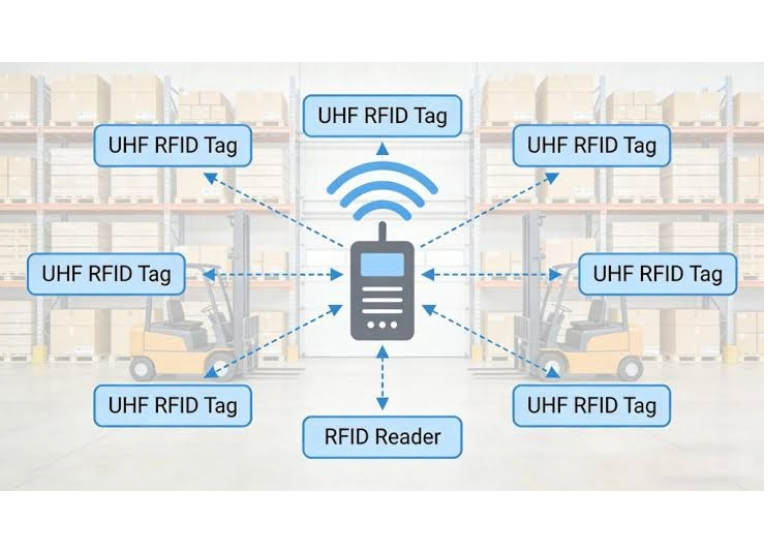
The UHF in RFID stands for Ultra-High Frequency, referring to a specific radio frequency band used for wireless item tracking and identification.
Overview
- UHF (Ultra-High Frequency): Refers to the radio frequency band ranging from 300 MHz to 3 GHz. Most systems operate between 860 and 960 MHz.
- RFID (Radio-Frequency Identification): Refers to a wireless technology that uses radio waves to identify, track, and manage tagged objects or assets.
Key Features
- Long Read Range: Can scan items from distances of 10 to 30 feet (3 to 9 meters) or more.
- Bulk Scanning: Allows readers to capture data from hundreds of tags simultaneously.
- Common Uses:
Frequently used in retail inventory, supply chain logistics, and warehouse tracking. You can read more about applications from ITSRFID RFID
- Frequency Range: Operates globally between 860 MHz and 960 MHz (with specific regional bands like 902–928 MHz).
YouTube·RedBeam
- Read Range: Offers long-distance reading capabilities, typically extending from 10 to 30 feet (3 to 10+ meters) depending on the equipment and environment.
- Bulk Scanning: Allows an RFID Reader to read hundreds of tags simultaneously per second without requiring a direct line-of-sight.
- Power Source: Most UHF RFID Tags are passive, meaning they contain no battery and draw operational power directly from the radio waves emitted by the reader